TL;DR
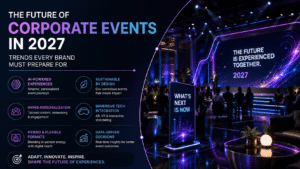
Corporate events in 2027 will no longer be judged by venue size, celebrity speakers or expensive stage setups alone.
Success will depend on:
- AI-powered personalization
- Hybrid experiences
- Sustainable planning
- Data-driven decision making
- Immersive technology
- Smart networking
- Digital content amplification
- Measurable business ROI
Brands that continue planning events using outdated methods will struggle to engage audiences whose expectations are changing faster than ever.
The companies that embrace innovation today will build stronger relationships, increase brand loyalty and achieve significantly better returns from every event.
Corporate Events Are Changing Faster Than Ever
Only a few years ago, organizing a successful corporate event meant booking an attractive venue, inviting speakers, arranging catering and hoping attendees enjoyed the experience.
That approach is no longer enough.
Today’s audiences expect experiences rather than presentations.
They expect personalization instead of generic communication.
They want interaction instead of passive listening.
Most importantly, businesses now expect measurable business outcomes—not just attendance nu
mbers.
Corporate events have evolved from operational gatherings into strategic marketing
platforms that influence:
- Brand awareness
- Customer loyalty
- Lead generation
- Employee engagement
- Partner relationships
- Product adoption
- Community building
- Business growth
By 2027, this transformation will accelerate even further.
Artificial intelligence, predictive analytics, immersive technologies and sustainability will redefine what businesses consider a successful event.
Brands that prepare early will enjoy a significant competitive advantage.
Trend 1: AI Will Personalize Every Guest Experience
Artificial intelligence is becoming one of the biggest drivers of event innovation.
Instead of treating every attendee the same, AI enables organizers to create highly personalized experiences.
Imagine attending a conference where:
- Your recommended sessions match your interests.
- Networking suggestions are based on your industry.
- The event app recommends exhibitors you’ll actually find useful.
- Your agenda updates automatically when sessions change.
- AI chat assistants answer questions instantly.
This level of personalization dramatically improves engagement because attendees spend less time searching and more time participating.
For brands, AI also generates valuable behavioral insights that can improve future events.
Rather than guessing what guests enjoyed, organizers can understand real engagement patterns and optimize accordingly.
Trend 2: Hyper-Personalization Will Become the New Standard
Personalization extends beyond AI recommendations.
Corporate events are shifting toward experiences tailored for individual attendees.
Brands are beginning to customize:
- Welcome experiences
- Content tracks
- Gift kits
- Networking opportunities
- Food preferences
- Session recommendations
- Digital follow-ups
Instead of delivering one event to thousands of people, successful organizers will create thousands of unique experiences within one event.
This increases:
- Satisfaction
- Session attendance
- Participation
- Brand recall
- Return attendance
Personalization creates emotional connections that generic events simply cannot match.
Trend 3: Hybrid Events Are Here to Stay
Many businesses initially viewed hybrid events as a temporary solution.
However, they have become a permanent strategy.
Hybrid events allow organizations to combine:
- Physical experiences
- Virtual participation
- Global accessibility
- On-demand content
- Extended audience reach
This model provides several advantages.
A company launching a product in Mumbai can simultaneously engage audiences from Bengaluru, Delhi, Singapore and Dubai without requiring travel.
Hybrid events also increase content longevity because recorded sessions continue generating value long after the event concludes.
Brands that ignore hybrid capabilities may significantly limit their reach.
Trend 4: Every Event Will Be Planned Using Data
In the past, event planning relied heavily on experience and intuition.
By 2027, successful planning will rely on data.
Organizers will evaluate:
- Registration trends
- Session popularity
- Engagement heat maps
- Crowd movement
- Networking activity
- Lead quality
- Social engagement
- Survey responses
- Content consumption
- Revenue attribution
Instead of asking,
“Did people enjoy the event?”
Brands will ask,
“Which experience generated the highest engagement?”
“What content produced the most qualified leads?”
“Which session increased purchase intent?”
Data will become the foundation of smarter event decisions.
Trend 5: Sustainability Will Influence Every Corporate Event
Sustainability is quickly becoming a business expectation rather than a marketing message.
Attendees increasingly notice unnecessary waste, excessive printing and environmentally harmful practices.
Future corporate events will focus on:
- Digital invitations
- QR-based registration
- Reusable branding
- Sustainable venue partners
- Eco-friendly giveaways
- Reduced plastic usage
- Local sourcing
- Carbon-conscious logistics
Sustainable event planning does more than reduce environmental impact.
It strengthens corporate reputation, especially among younger professionals and environmentally conscious businesses.
Modern audiences increasingly associate sustainability with responsible leadership.
Trend 6: Immersive Experiences Will Replace Passive Attendance
Traditional conferences often rely on presentations where attendees spend hours listening.
The future belongs to immersive participation.
Instead of simply watching presentations, guests will interact through:
- AR product demonstrations
- VR experiences
- Interactive installations
- Live simulations
- Gamification
- Touch-enabled displays
- Digital storytelling environments
These experiences dramatically improve information retention because people remember what they actively experience far more than what they simply hear.
For brands launching products or showcasing innovation, immersive engagement creates stronger emotional impact than conventional presentations.
Trend 7: AI-Powered Networking Will Transform Business Connections
One of the biggest challenges at corporate events has always been networking. While events bring together hundreds or even thousands of professionals, many attendees leave without making meaningful connections.
By 2027, artificial intelligence will make networking far more strategic.
Instead of attendees randomly exchanging business cards or hoping to meet the right people during coffee breaks, AI-powered networking platforms will analyze attendee profiles, business interests, industries, goals, and previous interactions to recommend the most relevant connections.
Imagine attending a leadership summit where your event app suggests five professionals who share similar business interests or could become valuable partners. The app automatically schedules networking meetings during available time slots, making every interaction purposeful.
Future networking features may include:
- AI-generated networking recommendations
- Smart meeting scheduling
- Digital business card exchange
- Real-time language translation
- Interest-based networking lounges
- Matchmaking based on business objectives
- Interactive networking games
- Post-event connection recommendations
For brands, this means attendees gain more value from the event, increasing satisfaction and encouraging future participation.
Trend 8: Event Content Will Continue Generating Value Long After the Event Ends
In the past, corporate events often concluded when the final session ended.
Today’s leading brands understand that an event should become an ongoing content engine.
By 2027, businesses will create content strategies that extend the life of every event.
Instead of viewing a conference as a one-day experience, organizations will transform it into months of valuable digital content.
Content opportunities include:
- Short-form videos
- Speaker interviews
- Industry insights
- Behind-the-scenes footage
- Blog articles
- Podcasts
- Webinar recordings
- Infographics
- LinkedIn thought leadership posts
- Case studies
- Customer success stories
- Highlight reels
This approach delivers multiple benefits.
A single corporate conference can fuel an entire marketing calendar, providing fresh content for websites, social media, email campaigns, and search engines.
For companies focused on SEO and digital visibility, this extended content strategy creates long-term value that goes far beyond the event itself.
Trend 9: Community-LDriven Events Will Replace One-Time Experiences
Traditional corporate events have often been transactional.
Guests attend, listen to presentations, collect materials, and leave.
The future belongs to community building.
Brands are increasingly recognizing that long-term relationships generate more value than one-day interactions.
Instead of asking, “How many people attended?” businesses will ask:
- How many people returned?
- How many joined our online community?
- How many became advocates?
- How many engaged after the event?
Successful corporate events in 2027 will become part of larger ecosystems that include:
- Exclusive online communities
- Learning platforms
- Monthly webinars
- Industry discussion groups
- Private networking forums
- Member-only events
- Knowledge-sharing sessions
Rather than hosting isolated events, brands will nurture continuous engagement throughout the year.
This strategy improves customer loyalty, strengthens professional relationships, and creates stronger brand advocacy.
Trend 10: ROI Will Replace Vanity Metrics
For years, businesses measured event success using metrics such as:
- Number of attendees
- Number of registrations
- Social media likes
- Event photographs
- Stage size
- Celebrity appearances
While these metrics provide useful information, they do not necessarily demonstrate business impact.
By 2027, companies will increasingly evaluate corporate events using measurable outcomes.
Important performance indicators will include:
| Traditional Metrics | Future ROI Metrics |
|---|---|
| Attendance | Qualified leads generated |
| Social media likes | Customer acquisition |
| Stage production | Sales opportunities created |
| Registration numbers | Revenue influenced |
| Number of speakers | Customer retention |
| Event impressions | Brand sentiment |
| Audience size | Engagement quality |
| Media coverage | Long-term business relationships |
Businesses will expect every event to contribute directly to marketing, sales, customer success, recruitment, or brand growth.
This shift means event planning teams must work more closely with marketing, sales, and leadership departments to define measurable objectives before planning begins.
Emerging Technologies That Will Shape Corporate Events Beyond 2027
Several technologies are expected to redefine the event industry over the coming years.
These include:
Digital Twins
Virtual replicas of physical venues will allow organizers to simulate crowd movement, seating arrangements, emergency planning, and visitor flow before the event takes place.
Predictive Analytics
AI systems will forecast attendee behavior, helping organizers estimate session popularity, food consumption, staffing requirements, and networking demand more accurately.
Voice-Activated Event Assistants
Instead of searching through apps, attendees may simply ask voice assistants for directions, schedules, speaker details, or networking recommendations.
Wearable Technology
Smart badges and wearable devices will improve networking, simplify access control, monitor attendee engagement, and enable real-time analytics.
Extended Reality (XR)
The combination of augmented reality, virtual reality, and mixed reality will make product demonstrations, training sessions, and brand storytelling more immersive than ever before.
How Brands Should Prepare Today for Corporate Events in 2027
Preparing for the future does not require adopting every new technology immediately.
Instead, brands should focus on building a strong strategic foundation.
1. Invest in Digital Infrastructure
Develop modern event websites, registration platforms, CRM integration, and marketing automation tools that support future growth.
2. Prioritize Data Collection
Begin tracking attendee behavior, engagement, and feedback consistently. First-party data will become increasingly valuable.
3. Build an Omnichannel Marketing Strategy
Integrate event marketing with SEO, social media, email campaigns, paid advertising, and content marketing to maximize reach before and after every event.
4. Focus on Experience Rather Than Logistics
Guests remember how an event made them feel. Create interactive experiences, personalized moments, and meaningful networking opportunities instead of simply managing logistics.
5. Embrace Sustainable Practices
Reduce waste, digitize communication, choose responsible vendors, and incorporate environmentally conscious planning into every event.
6. Upskill Internal Teams
Train marketing, HR, and event teams on emerging technologies such as AI, analytics, automation, and immersive experiences.
7. Measure Business Impact
Establish clear KPIs before planning begins and evaluate each event based on its contribution to business objectives rather than attendance alone.
Final Thoughts
Corporate events in 2027 will be defined by intelligence, personalization, sustainability, and measurable business value.
Technology will undoubtedly play a larger role, but successful events will still depend on understanding people. Brands that combine innovative tools with thoughtful planning and authentic engagement will stand out in an increasingly competitive marketplace.
Rather than viewing events as isolated marketing activities, forward-thinking organizations will integrate them into their broader digital strategy—connecting live experiences with SEO, social media, website optimization, content marketing, and customer relationship management.
At Buzz Entertainment Media, we believe the future of successful corporate events lies at the intersection of creativity, technology, and digital growth. Whether you’re planning a product launch, leadership summit, corporate conference, employee engagement program, or brand activation, combining exceptional event execution with a strong digital marketing strategy can significantly improve visibility, engagement, lead generation, and long-term business impact.
The brands that begin preparing today won’t just keep pace with industry change—they’ll help shape the future of corporate events.
FAQ SECTION
1. What will corporate events look like in 2027?
Corporate events in 2027 will be more technology-driven, personalized, and data-focused. Brands will rely on AI, hybrid event formats, immersive experiences, and real-time analytics to improve attendee engagement and measure business outcomes more effectively.
2. Why are hybrid corporate events becoming more popular?
Hybrid events combine in-person and virtual participation, allowing businesses to reach a larger audience while reducing travel barriers. They also extend the lifespan of event content through on-demand sessions, increasing overall ROI.
3. How will artificial intelligence improve corporate events?
AI will automate attendee registration, personalize agendas, recommend networking opportunities, provide virtual assistants, predict attendee behavior, and help organizers make data-driven decisions before, during, and after the event.
4. Why is guest experience becoming more important for corporate events?
Today’s attendees expect memorable and personalized experiences rather than traditional conferences. A positive guest experience increases engagement, strengthens brand perception, encourages repeat attendance, and improves word-of-mouth marketing.
5. How can companies measure the ROI of corporate events?
Businesses should track qualified leads, customer acquisition, attendee engagement, sales influenced, social reach, website traffic, feedback scores, conversion rates, and long-term customer relationships instead of relying only on attendance numbers.
6. What technologies will shape the future of event management?
Artificial intelligence, augmented reality (AR), virtual reality (VR), mixed reality (XR), wearable technology, predictive analytics, smart networking platforms, digital twins, and event automation tools are expected to transform corporate events over the next few years.
7. How can brands prepare for future corporate event trends?
Brands should invest in digital event platforms, adopt data-driven planning, integrate event marketing with SEO and social media, prioritize sustainability, personalize attendee experiences, and continuously measure event performance.