TL;DR
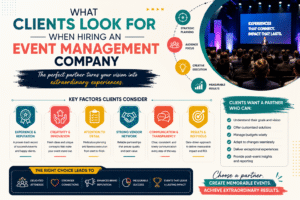
Businesses no longer hire event companies solely for logistics. Today, clients look for strategic partners that can create memorable experiences, manage budgets efficiently, leverage technology, engage audiences, and deliver measurable business results. The best Event Management Company combines creativity, execution excellence, and ROI-focused planning.
Why Choosing the Right Event Management Company Matters
An event can significantly influence how customers, employees, investors, and stakeholders perceive a brand.
Whether it’s:
- A product launch
- Corporate conference
- Annual meeting
- Dealer meet
- Award ceremony
- Brand activation
- Employee engagement event
Success depends heavily on the expertise of the event partner involved.
A poorly managed event can damage credibility, waste resources, and fail to achieve business objectives.
On the other hand, a professionally executed event can strengthen relationships, generate leads, improve brand perception, and create lasting impact.
This is why selecting the right Event Management Company has become one of the most important decisions organizations make during the planning process.
The Modern Client’s Expectations Have Changed
A decade ago, clients primarily evaluated event companies based on logistics and pricing.
Today, expectations have evolved.
Businesses now seek partners that can:
- Deliver measurable outcomes
- Understand brand objectives
- Create engaging experiences
- Integrate technology
- Manage risk effectively
- Provide strategic guidance
Modern event management goes far beyond venue booking and stage setup.
It has become an essential business and marketing function.
10 Things Clients Look for When Hiring an Event Management Company
1. Industry Experience
Experience remains one of the strongest indicators of reliability.
Clients want confidence that an agency has successfully managed similar events before.
They often evaluate:
- Years in business
- Industry specialization
- Types of events handled
- Client portfolio
- Scale of previous projects
Experience helps reduce uncertainty and increases trust.
2. Portfolio and Proven Results
A strong portfolio provides evidence of capability.
Clients want to see:
- Event photographs
- Videos
- Case studies
- Testimonials
- Success stories
The most convincing portfolios showcase measurable outcomes rather than simply attractive visuals.
Examples include:
- Attendance growth
- Engagement improvements
- Lead generation results
- Brand visibility metrics
3. Creativity and Innovation
Modern audiences expect more than standard event formats.
Clients increasingly value agencies that can bring fresh ideas and innovative experiences.
This includes:
- Experiential marketing concepts
- Interactive installations
- Technology-driven engagement
- Unique stage designs
- Immersive storytelling
Creativity helps brands stand out in crowded markets.
4. Communication and Responsiveness
Poor communication is one of the most common causes of event planning challenges.
Clients look for teams that:
- Respond quickly
- Communicate clearly
- Provide regular updates
- Offer proactive solutions
Strong communication builds confidence throughout the planning process.
5. Budget Management
Budget control is a critical concern for every organization.
Clients prefer agencies that:
- Offer transparent pricing
- Explain costs clearly
- Prevent unnecessary expenses
- Optimize resource allocation
A professional agency helps maximize value without compromising event quality.
6. Technology Capabilities
Technology now plays a major role in event success.
Clients increasingly expect expertise in:
- Event apps
- Registration platforms
- AI-powered engagement tools
- Hybrid event solutions
- Live streaming
- Analytics dashboards
Technology enhances attendee experiences while improving operational efficiency.
7. Strong Vendor Network
Successful events depend on multiple service providers working together.
Experienced agencies maintain relationships with:
- Venues
- Production teams
- Caterers
- Entertainment providers
- Decor specialists
- Technology vendors
A strong vendor network often results in better pricing, quality, and reliability.
8. Problem-Solving Ability
Unexpected challenges are inevitable in event management.
Examples include:
- Weather disruptions
- Technical failures
- Last-minute cancellations
- Venue issues
- Scheduling conflicts
Clients value agencies that remain calm under pressure and solve problems quickly.
9. Audience Engagement Expertise
An event’s success is ultimately determined by attendee experience.
Clients want agencies that understand:
- Audience behavior
- Engagement strategies
- Interactive experiences
- Networking opportunities
- Content delivery methods
The goal is to create meaningful experiences rather than passive attendance.
10. ROI and Performance Reporting
Businesses increasingly expect measurable results.
Modern clients ask:
- How many people attended?
- How engaged were attendees?
- What leads were generated?
- What business outcomes were achieved?
Top event companies provide detailed reporting and performance analysis.
This helps clients justify investments and improve future events.
Questions Clients Should Ask Before Hiring
Before selecting an event partner, decision-makers should ask:
Experience
- Have you managed similar events?
- Can you share relevant case studies?
Process
- What is your planning methodology?
- How do you handle project management?
Budget
- How are costs structured?
- What expenses are included?
Technology
- What event technology solutions do you provide?
Reporting
- How do you measure event success?
These questions help identify the most suitable partner.
Red Flags to Avoid
Not all agencies offer the same level of professionalism.
Warning signs include:
❌ Lack of references
❌ Poor communication
❌ Unclear pricing
❌ No documented processes
❌ Limited portfolio
❌ Unrealistic promises
❌ Inadequate contingency planning
Clients should carefully evaluate potential partners before making a decision.
How Professional Event Companies Deliver Better Outcomes
Professional agencies bring together:
- Strategic planning
- Creative execution
- Operational expertise
- Technology integration
- Vendor management
- Audience engagement
- ROI measurement
This combination significantly improves the likelihood of event success.
Instead of managing multiple vendors independently, clients gain access to a coordinated team focused on achieving business objectives.
Conclusion
Hiring an Event Management Company is no longer just about finding someone to organize logistics.
Modern businesses seek strategic partners capable of delivering memorable experiences, measurable results, and seamless execution.
The most successful event partnerships are built on trust, experience, innovation, communication, and a clear understanding of business goals.
Organizations that carefully evaluate these factors are far more likely to achieve successful events and stronger returns on investment.
Buzz Entertainment Media helps brands create impactful corporate events, experiential marketing campaigns, brand activations, and audience engagement experiences designed to deliver meaningful business outcomes.
6. FAQ SECTION
1: How do I choose the right Event Management Company?
The right Event Management Company should have relevant industry experience, a strong portfolio, transparent pricing, proven event execution capabilities, and excellent client communication.
Before hiring, review case studies, testimonials, event photos, and their ability to align events with your business goals.
2: What services should an Event Management Company provide?
A professional Event Management Company should offer:
- Event strategy and planning
- Venue sourcing
- Vendor management
- Event production
- Entertainment management
- Registration solutions
- Technology integration
- Audience engagement activities
- On-site coordination
- Post-event reporting
Comprehensive services reduce complexity and improve event outcomes.
3: Why should businesses hire an Event Management Company?
Hiring an Event Management Company saves time, reduces operational stress, improves event quality, and helps organizations achieve better results.
Experienced event professionals bring expertise, vendor relationships, technology solutions, and contingency planning that contribute to successful event execution.
4: What makes a good Event Management Company?
A good Event Management Company demonstrates:
- Strong communication
- Creativity
- Industry experience
- Budget management skills
- Problem-solving ability
- Reliable execution
- Technology expertise
- Measurable results
The best agencies focus on achieving business objectives rather than simply organizing logistics.
5: How important is event technology when selecting an agency?
Event technology has become increasingly important.
Modern event agencies should be capable of managing:
- Event apps
- AI-powered engagement tools
- Registration platforms
- Hybrid event technology
- Audience analytics
- Live streaming solutions
Technology enhances attendee experiences while improving event performance tracking.
6: What questions should I ask before hiring an event planner?
Important questions include:
- Have you managed similar events before?
- Can you share case studies?
- How do you measure event success?
- What technology solutions do you provide?
- How do you handle unexpected challenges?
- What is included in your pricing?
These questions help assess expertise and reliability.
7: How much does it cost to hire an Event Management Company?
Event management costs vary depending on:
- Event size
- Location
- Audience volume
- Production requirements
- Technology needs
- Entertainment requirements
Most agencies offer customized pricing based on project scope and objectives.
8: How can I measure the success of an event?
Success should be measured using business-focused metrics such as:
- Attendance rate
- Audience engagement
- Lead generation
- Brand visibility
- Customer satisfaction
- Revenue impact
- Event ROI
These indicators provide a clearer picture than attendance numbers alone.