TL;DR
Event technology is evolving faster than ever. From AI-powered event management and smart networking platforms to immersive AR experiences and predictive analytics, modern technologies are transforming how events are planned, executed, and measured. Organizations that embrace these innovations can improve attendee engagement, streamline operations, and maximize event ROI.
Why Event Technology Matters More Than Ever
The events industry has undergone a massive transformation over the past few years.
Attendees no longer expect events to be simple gatherings. They expect personalized experiences, seamless digital interactions, real-time communication, and measurable value.
At the same time, event organizers face increasing pressure to:
- Improve engagement
- Reduce operational complexity
- Generate measurable ROI
- Deliver memorable experiences
- Collect actionable attendee insights
This shift has accelerated the adoption of Event Technology Trends that are redefining the future of corporate events.
Technology is no longer a supporting tool—it has become a strategic driver of event success.
How Technology Is Reshaping the Events Industry
Traditional event planning relied heavily on manual processes, spreadsheets, and fragmented communication.
Today, event technology enables organizers to:
| Traditional Events | Technology-Driven Events |
|---|---|
| Manual registration | Automated registration |
| Generic experiences | Personalized experiences |
| Limited attendee data | Real-time analytics |
| Physical-only networking | AI-powered networking |
| Post-event reporting | Live performance dashboards |
| Basic attendee feedback | Predictive audience insights |
Organizations that invest in modern event technologies gain a competitive advantage by creating smarter, more engaging, and data-driven events.
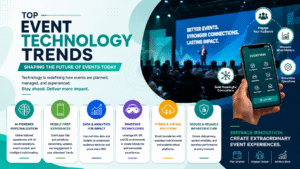
10 Event Technology Trends Dominating the Industry
1. Artificial Intelligence (AI) for Event Management
Artificial intelligence is quickly becoming the backbone of modern event operations.
AI can assist with:
- Personalized attendee recommendations
- Smart scheduling
- Automated customer support
- Event marketing optimization
- Lead qualification
- Audience behavior analysis
AI-powered tools help event organizers make faster and more informed decisions while improving attendee experiences.
2. Hybrid Event Platforms
Hybrid events continue to gain popularity because they combine the benefits of physical and virtual experiences.
Advantages include:
- Wider audience reach
- Increased accessibility
- Better content distribution
- Enhanced engagement opportunities
- Improved data collection
Businesses can now engage attendees regardless of their location.
3. Event Mobile Applications
Modern event apps have become essential for audience engagement.
Key features include:
- Personalized agendas
- Interactive maps
- Session reminders
- Live polling
- Networking tools
- Push notifications
Mobile apps improve attendee satisfaction while providing organizers with valuable engagement data.
4. Smart Networking Technology
Networking remains one of the most important reasons people attend corporate events.
AI-powered networking platforms now match attendees based on:
- Industry
- Job role
- Business objectives
- Interests
- Purchasing intent
This creates more meaningful business connections and increases event value.
5. Data Analytics & Predictive Insights
Event organizers now have access to real-time data that was previously unavailable.
Analytics tools can track:
- Attendance behavior
- Session popularity
- Engagement rates
- Lead quality
- Conversion potential
Predictive analytics helps organizers anticipate attendee behavior and optimize future events.
6. Contactless Event Experiences
Health, convenience, and speed have accelerated the adoption of contactless technologies.
Examples include:
- QR code check-ins
- Digital ticketing
- Contactless payments
- Touchless registrations
- Digital business cards
These technologies improve efficiency while enhancing attendee experiences.
7. Immersive AR and VR Experiences
Augmented Reality (AR) and Virtual Reality (VR) are transforming event engagement.
Applications include:
- Virtual product demonstrations
- Interactive brand activations
- Virtual venue tours
- Gamified attendee experiences
- Immersive storytelling
These technologies help brands create memorable and highly shareable experiences.
8. Event Automation Platforms
Automation reduces repetitive tasks and improves operational efficiency.
Event automation can manage:
- Registration workflows
- Email communication
- Lead nurturing
- Session scheduling
- Survey distribution
- Reporting processes
This allows event teams to focus more on strategy and audience engagement.
9. Audience Engagement Technology
Modern events are becoming increasingly interactive.
Popular engagement tools include:
- Live polls
- Audience Q&A
- Gamification
- Interactive quizzes
- Real-time surveys
- Social media integrations
These features increase participation and improve event outcomes.
10. Sustainability Technology for Events
Sustainability is becoming a key priority for organizations.
Technology supports eco-friendly events through:
- Digital event materials
- Electronic ticketing
- Carbon footprint tracking
- Smart resource allocation
- Virtual participation options
This helps reduce environmental impact while improving operational efficiency.
How Businesses Can Adopt Event Technology Successfully
Organizations should avoid implementing technology simply because it is trending.
Instead, they should:
Step 1: Define Event Goals
Determine whether the focus is:
- Lead generation
- Brand awareness
- Employee engagement
- Networking
- Product launches
Step 2: Identify Technology Gaps
Assess existing processes and identify inefficiencies.
Step 3: Prioritize High-Impact Solutions
Start with technologies that directly improve attendee experience and ROI.
Step 4: Train Event Teams
Technology is only effective when teams know how to use it properly.
Step 5: Measure Results
Track performance metrics to evaluate effectiveness and optimize future events.
Challenges of Event Technology Adoption
Despite its benefits, technology implementation comes with challenges.
Common obstacles include:
- Budget constraints
- Learning curves
- Data privacy concerns
- Platform integration issues
- User adoption challenges
A strategic approach helps organizations overcome these barriers while maximizing technology investments.
Future Outlook for Event Technology
The future of event technology will likely include:
- Advanced AI assistants
- Hyper-personalized attendee journeys
- Real-time translation tools
- Smart venue technologies
- Wearable event devices
- Enhanced AR and VR experiences
- Deeper predictive analytics
As technology evolves, events will become more personalized, intelligent, and measurable.
Conclusion
Event technology is no longer optional for organizations seeking to create impactful events.
The latest Event Technology Trends are helping businesses improve audience engagement, streamline operations, gather valuable insights, and maximize event ROI.
Companies that embrace innovation today will be better positioned to deliver memorable experiences and achieve stronger business outcomes tomorrow.
Buzz Entertainment Media combines creative event execution with modern event technologies to help brands deliver engaging, innovative, and results-driven event experiences.
6. FAQ SECTION
1: What are the most important event technology trends today?
The most important event technology trends include artificial intelligence (AI), hybrid event platforms, event mobile apps, smart networking tools, predictive analytics, AR/VR experiences, contactless event solutions, and event automation platforms.
These technologies help event organizers improve attendee experiences, streamline operations, and maximize event ROI.
2: How is AI changing the events industry?
AI is transforming the events industry by automating repetitive tasks, personalizing attendee experiences, improving networking opportunities, analyzing attendee behavior, and optimizing event marketing campaigns.
AI-powered tools help organizers make data-driven decisions while improving engagement and efficiency.
3: Why are hybrid events becoming more popular?
Hybrid events combine physical and virtual experiences, allowing businesses to reach larger audiences without geographic limitations.
They provide flexibility, increased accessibility, better content distribution, and more opportunities for audience engagement compared to traditional event formats.
4: How does event technology improve attendee engagement?
Event technology enhances engagement through:
- Interactive event apps
- Live polling
- Real-time Q&A sessions
- Gamification
- AI-powered networking
- Personalized content recommendations
These tools encourage participation and create more meaningful attendee experiences.
5: What role does data analytics play in event management?
Data analytics allows event organizers to measure attendee behavior, engagement levels, lead quality, and event performance.
These insights help improve future events, optimize marketing strategies, and demonstrate event ROI.
6: Are AR and VR useful for corporate events?
Yes.
Augmented Reality (AR) and Virtual Reality (VR) can significantly enhance event experiences through virtual product demonstrations, immersive brand storytelling, interactive exhibits, and virtual venue tours.
They help businesses create memorable and highly engaging event experiences.
7: What is event automation?
Event automation refers to the use of technology to streamline event management tasks such as registration, email communication, scheduling, attendee tracking, lead nurturing, and reporting.
Automation reduces manual work and improves operational efficiency.
8: What is the future of event technology?
The future of event technology includes:
- AI-driven personalization
- Smart venues
- Wearable event technology
- Advanced predictive analytics
- Real-time translation tools
- Immersive AR and VR experiences
- Intelligent networking platforms
These innovations will continue to transform how events are planned, managed, and experienced.
BLOG BY: BUZZ ENTERTAINMENT
Follow us on Linkedin – Buzz Entertainment Media